Greek Climate Fee 2026: 1.50 to 15 EUR per Night for Foreign STR
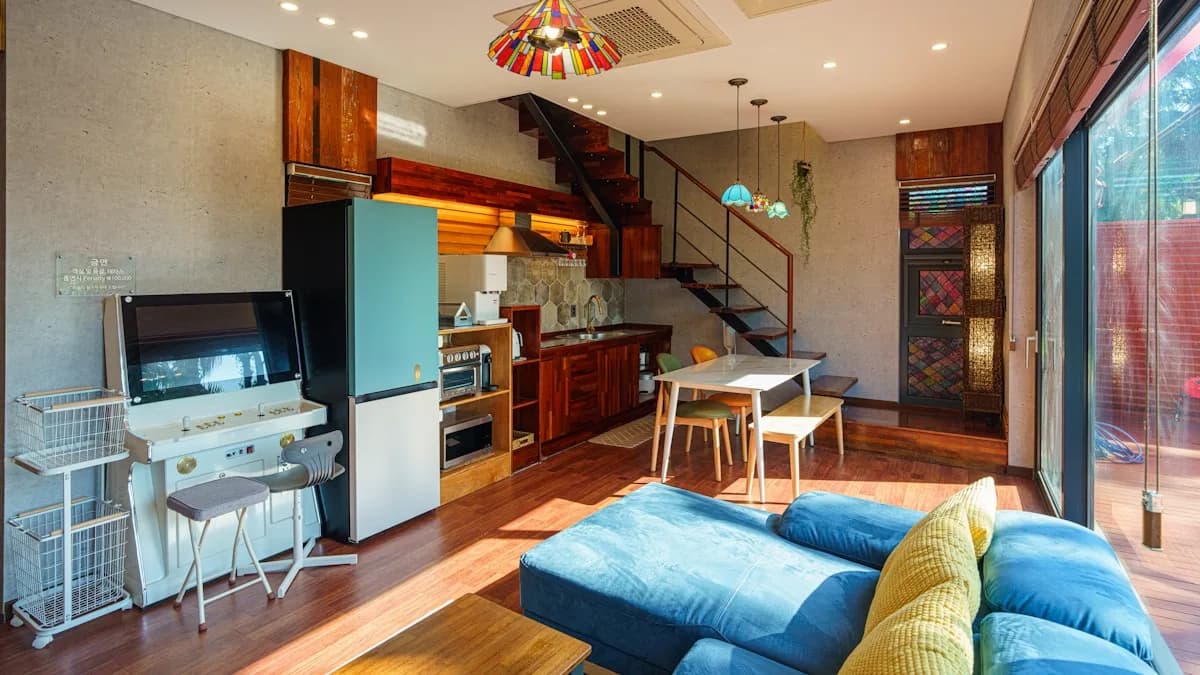
Climate Resilience Fee runs 1.50 to 15 EUR per night by category and season. Who pays, how to file the monthly ΑΑΔΕ return from abroad, and 5 mistakes that trigger fines.
READY-MADE AMA DOCUMENTATION
Get AMA-registered in 2 evenings.
Greek STR without the stress.
Instead of drafting documents from scratch (40+ hours) or paying a lawyer (€2,000+), download ready-made templates compliant with Nomos 5170/2025 and the AADE myProperty platform.
Greek Climate Fee 2026 for Foreign-Owned STR: 1.50 to 15 EUR per Night Impact
The Climate Resilience Fee (Τέλος Κλιματικής Ανθεκτικότητας), introduced in 2024 and aggressively escalated for 2026 under Νόμος 5170/2025, is now a daily charge that every short-term rental host in Greece collects from the guest and remits monthly to ΑΑΔΕ (Greek Independent Authority for Public Revenue). For UK and US owners running an Airbnb in Athens, Mykonos or Santorini, the fee replaces the older overnight stay tax and varies from 1.50 EUR per night for low-category dwellings in the off-season to 15 EUR per night for premium villas in summer. Get the collection wrong and you face Νόμος 5189/2026 fines starting at 5,000 EUR per property. This guide walks through the 2026 schedule, the monthly ΑΑΔΕ filing, the 5 mistakes foreign owners commonly make and the audit triggers that ΑΑΔΕ uses to find non-compliant non-residents.
The Climate Resilience Fee is structurally a guest tax. The economic incidence falls on the holidaymaker: they pay the fee on top of the nightly room rate. The compliance burden falls entirely on the host: you collect, you record, you file, you remit. There is no platform that does this for you. Airbnb does not collect Greek climate fee at source (unlike the Catalan IETT or the Italian imposta di soggiorno that some platforms now collect). Booking.com does not either. As a foreign owner you must build the fee into your guest communication, into your check-in process, into your monthly accounting cycle and into your myAADE filing routine.
2026 Fee Schedule by Category and Season
The 2026 schedule, fixed by Joint Ministerial Decision Α.1166/2025, splits dwellings into 4 categories based on size, amenities and prior tourism classification, then applies a high-season (April through October) and low-season (November through March) rate per category.
| Category | Definition | Low season EUR/night | High season EUR/night |
|---|---|---|---|
| Studio or 1-bed apartment | Up to 50 m2, no pool | 1.50 | 2.00 |
| 2-3 bed apartment | 51 to 120 m2 | 3.00 | 5.00 |
| Detached house or 4-bed | 121 to 250 m2 or with pool | 5.00 | 10.00 |
| Premium villa | Above 250 m2 or 5-star equivalent | 8.00 | 15.00 |
Note that the 2026 schedule doubled the high-season rate for premium villas (was 8 EUR in 2024, jumped to 15 EUR via Νόμος 5170/2025). Mykonos and Santorini owners with premium villas are the hardest hit: a 7-night booking at 15 EUR per night equals 105 EUR of fee per stay that you must collect, declare and remit. On a high-volume Mykonos villa with 100 nights of premium-season occupancy, the annual Climate Fee remittance reaches 1,500 EUR per year per property.
Who Pays: Guest Collected, Owner Remitted
The fee is invoiced to the guest. You can do this in three ways: include it in the headline rate (Airbnb category Other Fees), invoice it separately at check-in (cash or card terminal) or charge it via Airbnb resolution centre after check-out. The cleanest method for foreign owners is to add a line item Climate Resilience Fee Greek law to the listing description, set it as a Local taxes and fees field on Airbnb, and let the platform itemise it on the guest receipt while still routing the cash to your owner payout.
Whatever the collection method, the Greek law (art. 53 Νόμος 4389/2016 as amended by Νόμος 5170/2025) places the remittance obligation on the host. Even if a guest disputes the fee or refuses to pay, you remain liable to ΑΑΔΕ for the per-night amount based on actual occupied nights. ΑΑΔΕ verifies through DAC7 cross-references: Airbnb reports nights to ΑΑΔΕ via the platform feed, ΑΑΔΕ matches against your monthly Climate Fee return.
Monthly ΑΑΔΕ Return: How to File from London or NYC
The Climate Fee return is monthly. Deadline is the 20th of the month following the reporting month (January nights filed by 20 February, February nights filed by 20 March, etc.). The form is filed online through myAADE, in the section Δηλώσεις Φορολογίας Διαμονής, ΑΑΔΕ category code 020. The form requires: number of overnight stays per category in the month, total fee owed, IBAN for SEPA debit confirmation.
From London or NYC the filing requires myAADE login (your ΑΦΜ plus password) and AKE digital signature for confirmation. Without AKE you can fill the form but the system rejects the final submit. This is why every non-resident STR host should set up AKE during their initial ΑΦΜ paperwork (see the AΦΜ for foreign owners guide). Filing typically takes 10 to 15 minutes per month. Late filing triggers automatic 100 EUR fine plus 0.73 percent monthly interest on the outstanding fee.
The 5 Foreign-Owner Mistakes That Trigger Fines
Mistake 1: Treating the fee as part of your room rate income. Some UK accountants book the Climate Fee as revenue then deduct it as an expense. This inflates VAT exposure and overcomplicates the E2 declaration. The Greek treatment is clear: Climate Fee is a tax collected on behalf of the state, never revenue. Use a separate ledger account.
Mistake 2: Forgetting low-season nights. Even at 1.50 EUR per night, a Christmas booking still owes the fee. Some owners switch off the Climate Fee on their Airbnb listing in November to December and end up undercollecting. The fee applies year-round.
Mistake 3: Wrong category. A 110 m2 apartment with no pool is category 2 (3 to 5 EUR), not category 3 (5 to 10 EUR). Be conservative on classification: ΑΑΔΕ inspectors cross-reference your E9 declared square metres against your Climate Fee category. Misclassification is the most common audit trigger.
Mistake 4: Missing the 20th of the month deadline because of UK or US holidays. The Greek tax calendar does not respect Thanksgiving or the May Bank Holiday. Auto-pay your tax representative to file on time, do not rely on personal manual submission from abroad.
Mistake 5: Not keeping receipts. Each guest must receive an itemised receipt showing the Climate Fee separately. Airbnb receipts work if the fee is set up correctly. Booking.com receipts may need a manual addendum. Keep all receipts for 5 years per art. 13 ΚΦΔ.
Worked Example: Mykonos Premium Villa, UK Owner
A 4-bedroom Mykonos villa with private pool (category 4) operated by a UK couple. 2026 occupancy projection: 95 nights high season at 15 EUR plus 35 nights low season at 8 EUR. Annual Climate Fee due: 95 times 15 plus 35 times 8 equals 1,425 plus 280 equals 1,705 EUR. Filed monthly through May to October (high season concentrated) and December to February (Christmas plus winter weddings). Filing fee: 0 EUR. Tax representative monthly handling: included in 800 EUR annual retainer. Cash flow impact on guest: average 11.20 EUR per night across the year, or 1.7% to 2.4% on top of headline nightly rate.
Frequently Asked Questions
Does Airbnb withhold the Climate Fee on my behalf?
No. Unlike Catalonia or Italy where some platforms collect the equivalent fee at source, Greek Climate Fee is host-collected and host-remitted. Airbnb does report your nights to ΑΑΔΕ via DAC7 (Real Decreto 117/2024 transposing DAC7 in Greece is Νόμος 5045/2023), so your monthly return must reconcile against the platform feed. ΑΑΔΕ matches automatically.
What about long-term tenants on a 30-day Airbnb booking?
Stays above 27 nights are exempt from the Climate Fee under art. 53 par. 8. This mirrors the Greek law definition of short-term rental (rentals up to 90 nights subject to ΑΜΑ rules and Climate Fee, longer terms subject to general rental income tax only). For a 30-night booking the fee is zero. Make sure your Airbnb listing toggles the fee off for stays above 27 nights.
Are children exempt from the fee?
No. The Climate Fee applies per night per dwelling, not per occupant. A family of 4 paying for a 2-bed apartment in July owes 5 EUR per night total, not 5 EUR per person.
Can I deduct the Climate Fee on my UK Self Assessment?
The Climate Fee is not your tax expense (it is the guest's), so you do not deduct it on your SA106 foreign property pages. It also does not increase your gross rental income. Treat it as a pure pass-through. HMRC accepts this if your accounting clearly separates the Climate Fee ledger from rental income.
What if I undercollected the fee from a guest who refused to pay?
You owe ΑΑΔΕ the full amount based on actual occupied nights regardless of guest cooperation. The remedy against the guest is civil (small claims if you have UK or US enforcement options, or a deduction from the Airbnb security deposit). Always set Climate Fee as a mandatory checkout fee through Airbnb resolution centre to make collection automatic.
How does ΑΑΔΕ audit non-resident hosts?
The 2026 audit programme (announced May 2025) cross-references three datasets: DAC7 platform feed (nights and gross from Airbnb plus Booking), Greek bank deposits matched to ΑΦΜ, and electricity consumption data from DEDDIE for high-tourism districts. Foreign owners with low Climate Fee filings and high DAC7 nights are flagged automatically. The first-action remedy is a written request for explanation; the second-stage remedy (after 30 days) is a 5,000 to 20,000 EUR fine plus retroactive Climate Fee plus interest.
Need help building the monthly Climate Fee filing rhythm, sourcing a tax representative who handles ΑΑΔΕ portal submissions on your behalf and producing a fee receipt template that satisfies both Airbnb and Greek invoice law? The Standard Package HostReady (Greece) includes a Climate Fee monthly calendar, a category-classification self-assessment, an Airbnb listing fee setup walkthrough and a UK or US accountant briefing pack to keep the fee out of your foreign property tax return.
Don't want to search for templates and regulations on your own? The HostReady Package includes complete documentation, ready-to-use templates, and checklists - everything you need for CWTON registration and legal short-term rental, ready to use right after purchase.