The Welcome Book: An Apartment Guide That Cuts Guest Questions
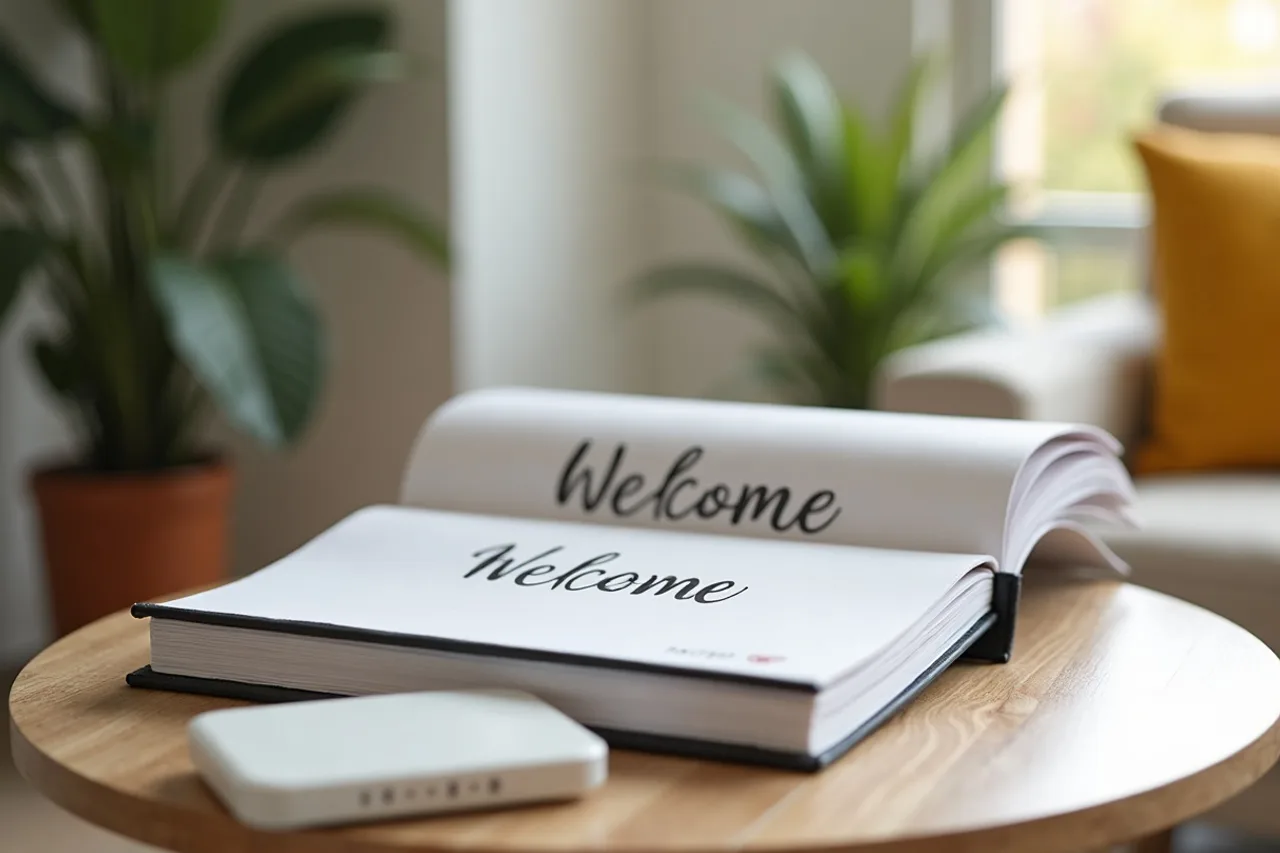
Wifi, appliances, faults, the neighbourhood - a good apartment guide answers questions before guests ask. Structure step by step plus format: paper, PDF or QR.
READY-MADE STR DOCUMENTATION
Get your documents ready in 2 evenings.
Before your municipality asks.
Instead of writing documents from scratch (40+ hours) or paying a lawyer (£1,500+), download ready-made templates aligned with Polish STR law and the UC135 bill.
The welcome book: an apartment guide that stops your phone from ringing
"How do I turn on the induction hob?", "What's the wifi password?", "The TV isn't working" - every short-term rental host knows these messages by heart. Most of them should never reach you. A well-prepared apartment guide (welcome book) answers questions before guests ask them, and complements the rules you formally set out in your house rules. It's one of the cheapest ways to earn better reviews and quieter evenings.
Key takeaways
- A welcome book is a practical guide to the apartment: wifi, appliances, rules, emergency contacts and the neighbourhood - all in one place
- It doesn't replace the house rules: the rules set the terms, the welcome book explains how to use the unit day to day
- The best setup is a duo: a printed version in a visible spot plus a digital version (PDF or web page) sent before arrival
- Update the guide whenever anything in the unit changes - an outdated welcome book generates more questions than none at all
Welcome book vs house rules
These two documents are often confused, but they do different jobs. House rules are the terms: quiet hours, no smoking, no parties, guest limits, liability for damage. The welcome book is the user manual: how to operate appliances, where things are, what to do in unusual situations. Guests accept the rules at booking; they open the guide during the stay when they need something. In practice, the welcome book can summarise the key rules with a pointer to the full version - but not the other way round.
Structure of a good welcome book
1. Welcome and basics
- a short welcome (2-3 sentences, no essay about the building's history)
- wifi: network name and password - large print, on the first page; it's the number one thing guests look for
- your contact details and response hours, plus a channel for urgent matters
- check-in and check-out times and the key return procedure
2. Operating the appliances
Describe step by step everything with more than one button: the induction hob (child lock is the classic midnight message), oven, washing machine with programme translations, dishwasher, coffee machine, smart TV, air conditioning or heating with recommended settings. A photo of the control panel with labelled buttons works better than a paragraph of text. For gas appliances and fireplaces, add safety rules and where to find the extinguisher and CO detector.
3. Things guests look for
- spare linen, towels, blankets, hair dryer, ironing board
- cleaning supplies, bin bags, spare toilet paper
- waste sorting rules and bin locations (a frequent stumbling block for international guests - the rules differ between countries)
- parking: where it's allowed, paid zones, how to get a ticket
4. Safety and faults
The 112 emergency number, the exact address with floor and gate code, the location of water and gas shut-off valves, the fuse box, the first aid kit and the evacuation route. Add a simple path: what the guest should do when something stops working - who to message, what counts as urgent and what can wait until morning.
5. The neighbourhood
A few personally tested recommendations instead of a pasted city guide: the nearest shop with opening hours, a pharmacy (including 24-hour), an ATM, public transport with a timetable link, 3-5 places to eat across budgets. The neighbourhood section does the most work for your reviews, because it shows a real host behind the listing.
Format: paper, PDF or web page
| Format | Pros | Cons |
|---|---|---|
| Binder or folder in the unit | always at hand, works offline, looks good | updates require reprinting, guests don't have it before arrival |
| PDF sent before the stay | guests know the basics before entering, easy to update | gets lost in the inbox, nobody reopens an attachment mid-stay |
| Web page or QR code in the unit | always the latest version, easy translations, links | needs internet, older guests prefer paper |
The best results come from combining them: a condensed printed version in a visible spot (wifi, contacts, key appliances, faults) plus a full digital version linked by QR code and sent in the welcome message. With self-check-in, a digital version sent before arrival is practically mandatory - the guest needs to know how to get inside before standing at the door.
Languages and updates
Polish and English are the minimum. If you regularly host guests from a specific country, add a third language - with a digital version that's one translation, not another binder. Set a simple update rule: every change in the unit (new appliance, new wifi password, stairwell renovation) goes into the guide immediately. An outdated guide is more frustrating than none, because the guest first wastes time following stale steps and then messages you anyway. The welcome book ties into the rest of your property documentation - house rules, the fault-reporting procedure and the full document checklist for short-term rental - so keep the source files together and update them as a set.
Frequently Asked Questions (FAQ)
Is a welcome book mandatory?
No, it's good practice rather than a legal requirement. Mandatory information elements (like house rules or the host's contact details) are handled by the rules and booking information - the welcome book supplements them and makes the stay run itself.
How long should a welcome book be?
As short as possible. A printed version works well at a dozen or so pages with plenty of photos and lists; the condensed version fits on one or two pages. If a guest needs a piece of information within 30 seconds (wifi, faults, contact), it belongs at the front, not on page twelve.
Can I put deposit and damage rules in the welcome book?
You can summarise them, but binding provisions about liability and deposits should come from the house rules and booking terms the guest accepted. In the guide, add a practical request: report faults and dirt right after arrival - it protects both sides in any later claim.
What tool should I use to create it?
Any text editor or a free graphic tool with ready templates. Being up to date and clearly structured matters more than aesthetics: a table of contents, big headings, labelled photos of appliances. Keep an editable source version so you can update it six months from now.
Don't want to search for templates and regulations on your own? The HostReady Package includes complete documentation, ready-to-use templates, and checklists - everything you need for CWTON registration and legal short-term rental, ready to use right after purchase.