Smoke Detector, CO Detector and First Aid Kit for Your STR
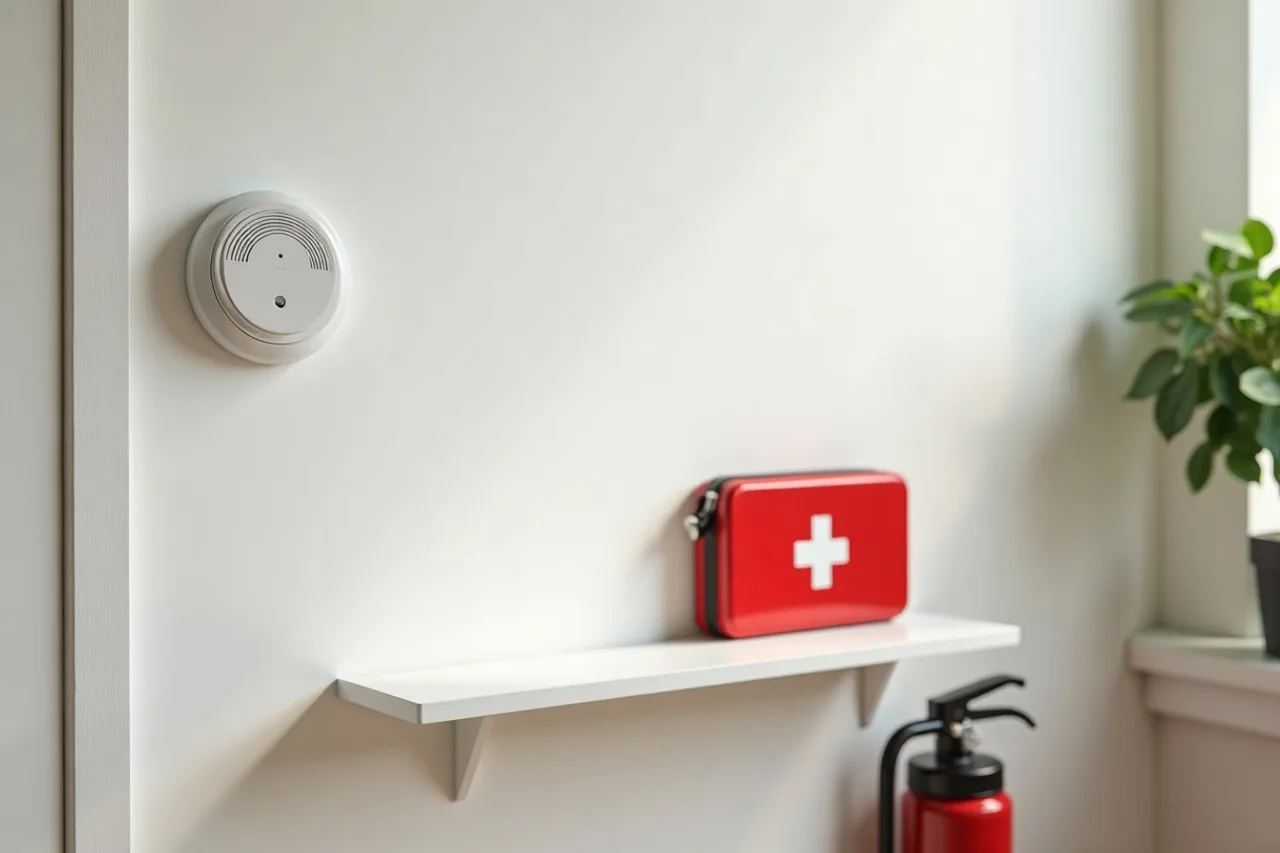
Detectors, an extinguisher, a first aid kit and evacuation info - what a rental apartment really needs, where to mount it and how to keep inspections on schedule.
READY-MADE STR DOCUMENTATION
Get your documents ready in 2 evenings.
Before your municipality asks.
Instead of writing documents from scratch (40+ hours) or paying a lawyer (£1,500+), download ready-made templates aligned with Polish STR law and the UC135 bill.
Smoke detector, CO detector and a first aid kit: safety equipment for your rental apartment
Guests don't know your apartment. They don't know where the fire extinguisher is, how the gas hob works, or which way out of the building to take during an alarm. That's why safety equipment in a short-term rental isn't just about fire safety requirements - it's common sense: a few hundred zloty spent on detectors and a first aid kit is the cheapest protection a host can buy.
Key takeaways
- A smoke detector and a carbon monoxide (CO) detector are the absolute basics - booking platforms ask about them directly in the listing form
- The first aid kit, extinguisher and clear evacuation information should have a fixed, labelled location that guests learn about at check-in
- Unchecked equipment is equipment you don't have: test detector batteries and check the extinguisher's expiry on a fixed schedule
- Describe your equipment in the listing truthfully - declaring detectors that don't exist can backfire badly if damage occurs
Smoke detector: where and which one
An autonomous smoke detector is a ceiling-mounted device that sounds a loud alarm when it detects smoke. A sensible rule for a rental: at least one per floor, ideally in the hallway leading to the bedrooms, away from the kitchen (so cooking steam doesn't trigger false alarms).
- Choose CE-certified detectors compliant with EN 14604 - the European standard for autonomous smoke alarms
- Models with a 10-year battery save you annual battery swaps and the risk of a guest removing a beeping battery and not putting it back
- Don't mount detectors in the bathroom or right by a window - steam and draughts distort the reading
CO detector: essential wherever fuel burns
Carbon monoxide is odourless and invisible - a sleeping person has no chance of noticing it. A CO detector is a must wherever a fuel-burning appliance operates in the unit or building: a gas water heater, gas hob, fireplace or stove. Mount it in the room with the potential CO source, at eye level or higher, at the distance from the appliance specified by the manufacturer.
Even in a fully electric apartment, a CO detector is worth considering when the building has shared flues or neighbours use gas - CO can travel between units through leaky ventilation ducts. While you're at it, check the ventilation itself: we covered it in our article on ventilation in an STR apartment.
Fire extinguisher and fire blanket
Pick a small household extinguisher and place it somewhere visible and reachable - the kitchen or hallway, not the bottom of a wardrobe. A fire blanket next to the hob is a cheap addition that handles burning fat on a pan far better and more safely than water. Extinguishers have expiry dates and require periodic servicing - the date is on the label. An expired extinguisher looks fine in photos but works against you in any post-fire proceedings. The formal side of fire protection, including the fire safety declaration, is covered separately.
First aid kit
The kit doesn't need to be elaborate - it should cover minor cuts and injuries until medical help is available: plasters in various sizes, sterile gauze and bandages, wound disinfectant, disposable gloves, scissors, a triangular bandage and a thermal blanket. Don't include oral medication (painkillers etc.) - choosing medicine is the guest's responsibility, and providing it as amenities creates unnecessary risk. Put the kit in a labelled spot and add "check first aid kit is complete" to the cleaning checklist - guests use plasters more often than they report.
Information for guests: instructions and emergency numbers
- the 112 emergency number and the apartment's address written out so a guest can read it to a dispatcher (floor, unit number, gate code)
- the location of the extinguisher, fire blanket, first aid kit, shut-off valves (gas, water) and the fuse box
- the evacuation route - a description or simple sketch: stairwell, exits, "don't use the lift during a fire"
- your contact number and the fault-reporting procedure
If you host international guests, prepare an English version and summarise the same points in your pre-arrival message.
Inspection schedule: unchecked equipment doesn't exist
| Item | How often | What exactly |
|---|---|---|
| Smoke detector | test button monthly, visual check at every turnover | sound test, detector in place and not taped over |
| CO detector | test button monthly | sound test, sensor expiry date (typically 5-10 years) |
| Extinguisher | visual check at every turnover | presence, seal, pressure indicator, service date |
| First aid kit | monthly | completeness, expiry dates of supplies |
| Instructions and signage | quarterly | legibility, up-to-date contact numbers |
The simplest implementation is adding these points to the cleaner's checklist - the check then happens automatically at every turnover, with a record that it was done. Log the results even in a simple spreadsheet: in a damage claim, that history can be priceless, much like the host liability insurance itself.
Frequently Asked Questions (FAQ)
Is a smoke detector mandatory in a rental apartment?
Requirements depend on the character of the property and how the business is run, so there's no single answer for every case. Regardless of the legal minimum, a smoke detector is the standard expected by booking platforms (Airbnb and Booking ask about it in the listing) and a basic layer of protection for guests and your property - the cost is symbolic compared to the risk.
Where should I mount a CO detector if I only have a gas hob?
In the room with the hob or the adjoining hallway, following the manufacturer's instructions - usually at eye level or higher, at a specified distance from the appliance, not directly above the burners. Avoid spots near a window or ventilation grille, as airflow distorts the reading.
Can I leave painkillers in the first aid kit for guests?
Better not. The kit should contain dressings and disinfectants, not oral medication - you don't know a guest's allergies, contraindications or correct dosage. Instead, point out the nearest pharmacy in your apartment guide, including a 24-hour one.
Who is responsible for checking the detectors if a cleaning company services the apartment?
Responsibility towards guests stays with you as the host, but the task itself can be delegated - add detector tests and the extinguisher check to the cleaning checklist and require confirmation (a tick in an app or a photo). Put it explicitly in the contract or scope of services.
Don't want to search for templates and regulations on your own? The HostReady Package includes complete documentation, ready-to-use templates, and checklists - everything you need for CWTON registration and legal short-term rental, ready to use right after purchase.