Buying Property for Italian STR 2026: Yield Analysis
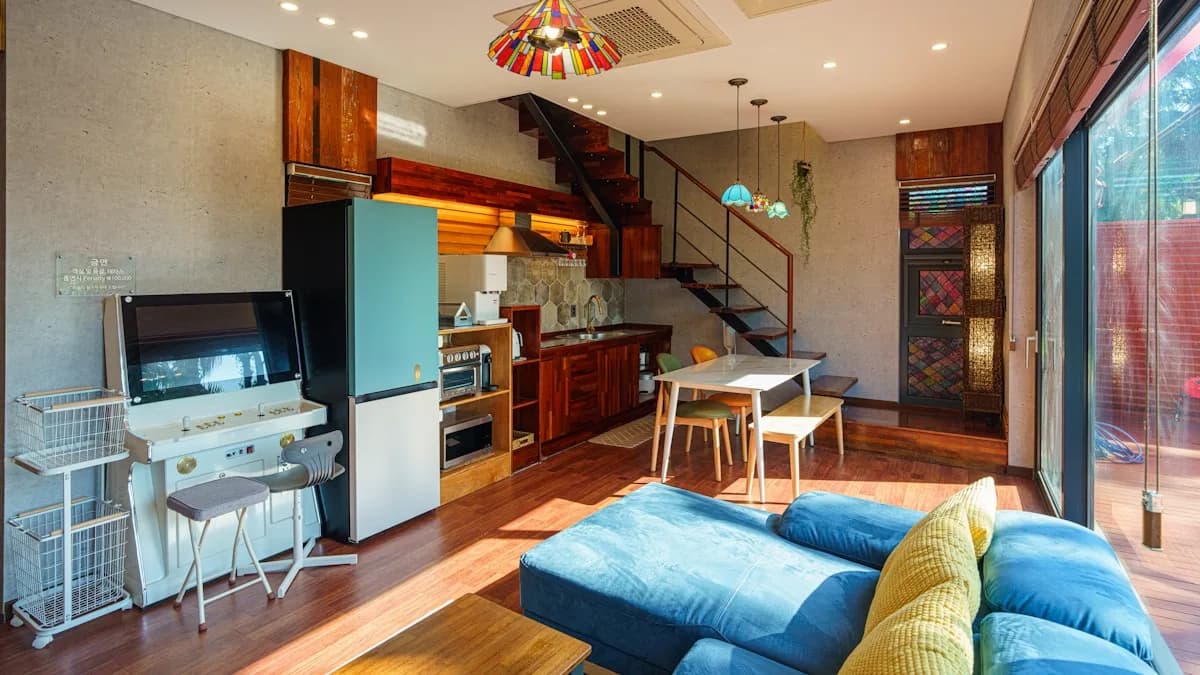
Milan 4.9% gross yield, Rome 6.4%, Florence 5.8%: 2026 analysis with CIN costs, cedolare secca and purchase prices. Full ROI table for foreign buyers.
READY-MADE CIN DOCUMENTATION
Get CIN-compliant in 2 evenings.
Italian STR without the stress.
Instead of drafting documents from scratch (40+ hours) or paying a consultant (€2,000+), download ready-made templates compliant with DL 145/2023 and the BDSR national registry.
Buying Property for Italian STR 2026: Yield Analysis for Milan, Rome and Florence
Milan 4.9% gross yield, Rome 6.4%, Florence 5.8%: 2026 analysis with CIN costs, cedolare secca tax and purchase prices for each city. This guide is written for UK, Irish and US buyers considering Italian property investment for short-term rental purposes, with a full explanation of the Italian buying process and the regulatory landscape for foreign nationals.
Buying Italian property for short-term rental has attracted significant international interest since 2020, driven by the combination of relatively accessible purchase prices in secondary zones, high tourist demand in Italy's major cities, and the yield premium that STR generates over long-term letting. However, the Italian regulatory environment has become substantially more complex since 2023, with new CIN requirements, insurance mandates and city-level restrictions creating both compliance costs and, in some cities, structural scarcity value for compliant properties.
This guide provides the 2026 yield data for the three main markets, explains the Italian purchase process for foreign buyers step by step, and covers the CIN and tax compliance requirements that directly affect your net return.
Can foreigners buy property in Italy?
Yes, with no restrictions applicable to most buyers reading this guide:
- EU/EEA citizens (including Irish nationals): full ownership rights, no restrictions.
- UK nationals (post-Brexit): can purchase Italian property without restrictions under Italian law. Italy does not impose UK-specific restrictions on property ownership. UK nationals need a codice fiscale (obtainable free at any Italian consulate) and a non-resident Italian bank account for the transaction.
- US nationals: can purchase Italian property without restrictions. US citizens benefit from reciprocal property ownership rights under the Italy-US treaty. Codice fiscale and a local bank account or fiscal representative are required.
- Non-EU nationals generally: most countries have reciprocal agreements with Italy permitting property ownership. A notaio (notary) will verify your specific situation before proceeding.
The Italian property purchase process for foreign buyers
The Italian purchase process is more formalised than in many other countries and involves mandatory notaio involvement at completion. The typical timeline:
- Step 1 - Proposta d'acquisto (offer): a written offer submitted to the estate agent (agente immobiliare). This is legally binding once accepted by the seller. A small deposit (typically 1-2% of purchase price) is paid at this stage.
- Step 2 - Compromesso (preliminary contract): a more detailed preliminary agreement signed by both parties, typically 4-8 weeks after the offer. At this stage, the buyer pays a caparra confirmatoria (deposit) of typically 10-20% of the purchase price. If the buyer withdraws, the caparra is forfeited. If the seller withdraws, they must return double the caparra.
- Step 3 - Rogito (final deed): the formal transfer of ownership before a notaio. The notaio verifies the legal status of the property, prepares the deed, collects taxes and fees, and registers the transfer with the land registry (Conservatoria dei Registri Immobiliari).
Key costs at rogito stage for non-residents purchasing as an investment (seconda casa):
- Imposta di registro (registration tax): 9% of the cadastral value (valore catastale), which is typically 20-50% of the market price for older properties. On a 250.000 EUR Rome apartment, this might be 8.000-15.000 EUR.
- Imposta ipotecaria e catastale: 50 EUR each (fixed).
- Notaio fees: 1,500-4,000 EUR depending on property value.
- Estate agent commission: 2-4% of purchase price plus VAT.
- Total transaction costs for a non-resident buyer: typically 13-17% of purchase price.
Milan: yield analysis 2026
Milan is the most expensive Italian market to purchase in but provides the most stable year-round demand through business tourism, major events and the December 2026 Winter Olympics preparations.
- Average purchase price (semi-central zone): 5.500 EUR per sqm. A two-bedroom apartment of 55 sqm in Navigli, Isola or Porta Romana costs approximately 290.000-330.000 EUR.
- Average ADR 2026: 220 EUR per night.
- Average occupancy: 72% (263 nights per year).
- Gross annual revenue: 220 x 263 = 57.860 EUR.
- Gross yield: 57.860 / 302.500 = 4.9%.
- Estimated net yield after cedolare secca (21%), platform fees (16%) and operating costs: 2.8-3.2%.
Milan's key advantage is low seasonality: even in August, when most Italian STR markets decline, Milan maintains a base of international patients accessing private medical facilities, business travelers and a growing conference market. The Winter Olympics December 2026 create an exceptional but temporary demand spike: purchase prices in central Milan are already partially reflecting this premium.
Rome: yield analysis 2026
Rome offers the highest gross yield of the three markets due to a favourable purchase price to ADR ratio, particularly in semi-central zones like Prati, Trastevere, Pigneto and Testaccio.
- Average purchase price (semi-central zone): 4.200 EUR per sqm. A two-bedroom apartment of 55 sqm costs approximately 220.000-255.000 EUR.
- Average ADR 2026: 180 EUR per night.
- Average occupancy: 78% (285 nights per year).
- Gross annual revenue: 180 x 285 = 51.300 EUR.
- Gross yield: 51.300 / 241.500 = 6.4%.
- Estimated net yield after cedolare secca, fees and operating costs: 3.8-4.2%.
The main risk for Rome buyers is regulatory: the City of Rome introduced restrictions in 2025 on new tourist rental authorisations in Zone A (historic centre and central districts) where STR saturation exceeds 80% of residential properties. For foreign buyers targeting Zone A properties, checking whether the specific apartment already holds an active CIN is critical due diligence: a property with an active CIN commands a 10-15% market premium and avoids the authorisation block.
Florence: yield analysis 2026
Florence has an outstanding international tourism profile, moderate purchase prices and a rapidly tightening regulatory environment driven by UNESCO heritage protection.
- Average purchase price (semi-central zone): 4.800 EUR per sqm. A two-bedroom apartment of 55 sqm costs approximately 250.000-285.000 EUR.
- Average ADR 2026: 160 EUR per night.
- Average occupancy: 68% (248 nights per year).
- Gross annual revenue: 160 x 248 = 39.680 EUR.
- Gross yield: 39.680 / 272.800 = 5.8%.
- Estimated net yield after cedolare secca, fees and operating costs: 3.4-3.8%.
Florence introduced a ban on new tourist rental activity within the UNESCO perimeter in 2024. Properties already registered with an active CIN within this zone are exempt from the ban and represent a structurally scarce asset: their market values have increased 15-20% since 2023 precisely because no new competition can enter. For investors buying in Florence, a property with an existing active CIN in the historic centre is worth paying a significant premium over a comparable property without CIN authorisation.
Full comparison table
| Indicator | Milan | Rome | Florence |
|---|---|---|---|
| Purchase price per sqm (semi-central) | 5.500 EUR | 4.200 EUR | 4.800 EUR |
| Average ADR 2026 | 220 EUR/night | 180 EUR/night | 160 EUR/night |
| Average occupancy | 72% | 78% | 68% |
| Gross annual revenue (55 sqm) | 57.860 EUR | 51.300 EUR | 39.680 EUR |
| Gross yield | 4.9% | 6.4% | 5.8% |
| Estimated net yield | 2.8-3.2% | 3.8-4.2% | 3.4-3.8% |
| Regulatory risk | Low-medium | High (Zone A block) | High (UNESCO ban) |
| Seasonality | Low (year-round demand) | Medium (Easter, summer peaks) | High (November-January decline) |
| CIN with property premium | Small | Significant (Zone A) | Very significant (UNESCO centre) |
Tax implications for foreign buyers: cedolare secca and mortgage interaction
Foreign owners renting Italian property are subject to Italian income tax on rental income under the Italy-UK and Italy-US double taxation treaties (the source country taxes real estate income). Cedolare secca - the flat-rate 21% substitutive tax for the first property, 26% from the second Italian property onwards - is available to non-resident owners and is generally the most efficient option for STR income.
One critical interaction: electing cedolare secca eliminates the right to deduct mortgage interest payments from rental income under Art. 26 TUIR and D.Lgs. 23/2011. For buyers financing with an Italian mortgage, this means comparing the tax saving from cedolare secca against the loss of mortgage interest deductions. At typical Italian mortgage rates (3.5-4.5% in 2026) and a 60% loan-to-value ratio, this can be a significant consideration. A commercialista (Italian tax professional) should model both scenarios before you commit to financing structure.
CIN due diligence checklist for foreign buyers
- Verify the property is in cadastral category A (residential use). Categories A/10 (office) or C/2 (storage) are not eligible for CIN.
- Review the full condominium regulations for short-term rental prohibition clauses. Post-purchase modifications are not retroactively binding on you, but pre-existing prohibitions in the original deed are.
- Check the agibilita certificate (certificate of habitability) exists. Required for CIN; properties built before 1992 without this certificate need a qualified engineer's self-certification.
- For Rome Zone A and Florence UNESCO centre: verify whether the zone is subject to a new-authorisation block before purchasing a property without existing CIN.
- If the property has an existing active CIN: verify it can be transferred to new ownership (it can, but the titular holder must be updated in the BDSR post-completion).
- Check installation compliance: boiler service certificate, CO detector, 6 kg fire extinguisher. Budget 300-1.000 EUR for any required upgrades.
For CIN registration after purchase, follow the CIN BDSR step-by-step guide for foreign owners. For optimising revenue from your Italian property, read the dynamic pricing guide for Italian STR.
This article is for informational purposes only. Yield figures are estimates based on third-party market data and may vary significantly by specific property, location and market conditions. HostReady does not provide investment, legal or tax advice. Consult a qualified Italian property lawyer (avvocato), commercialista and real estate agent for personalised guidance before making any purchase decision.
Don't want to search for templates and regulations on your own? The HostReady Package includes complete documentation, ready-to-use templates, and checklists - everything you need for CWTON registration and legal short-term rental, ready to use right after purchase.