Buying French STR Property 2026: Paris, Lyon, Bordeaux Yield
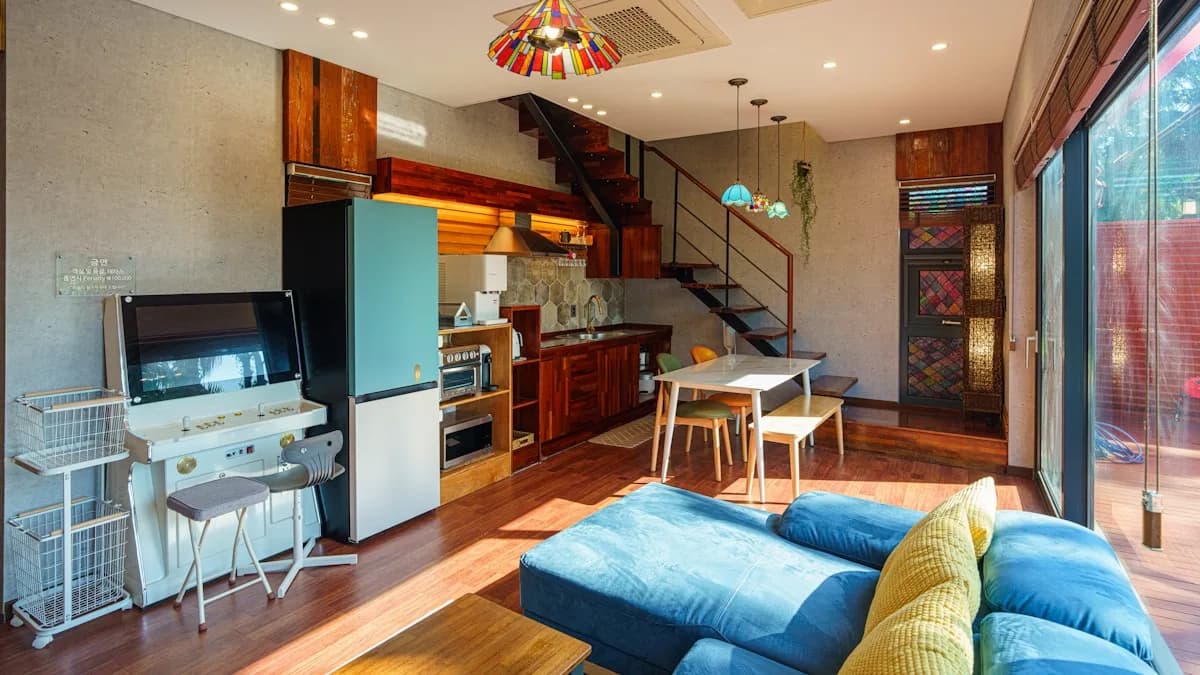
Paris 3.8% gross yield, Lyon 5.1%, Bordeaux 4.9%, Marseille 6.2%: full 2026 analysis with purchase price, ADR, occupancy, BIC tax and regulatory risk for foreign buyers.
READY-MADE FRENCH STR DOCS
Get registered in 2 evenings.
French STR without the stress.
Instead of drafting documents from scratch (40+ hours) or paying a notaire (€2,000+), download ready-made templates compliant with Loi 2024-1039 (Loi Le Meur) and Code du Tourisme.
Buying a property in France to operate as a short-term rental (meuble de tourisme) can generate attractive yields, but the picture varies dramatically by city, neighbourhood and property type. In 2026, the combination of high acquisition costs (notaire fees of 7-8%), tighter municipal regulations and the BIC tax regime makes careful upfront analysis indispensable. This guide provides city-by-city yield data, a practical purchase process guide, and specific considerations for non-resident foreign buyers including post-Brexit UK nationals.
Gross Yield by City: 2026 Analysis
The following table is based on average purchase prices, median average daily rates (ADR) and average occupancy rates observed on Airbnb and Booking.com in each city during 2025, projected to 2026:
| City | Avg. Purchase Price (EUR/m2) | Median ADR (EUR/night) | Avg. Occupancy | Estimated Gross Yield |
|---|---|---|---|---|
| Paris (central arrondissements) | 9,800 | 145 | 72% | 3.8% |
| Lyon (Presqu'ile, 1st-2nd) | 5,400 | 110 | 68% | 5.1% |
| Bordeaux (Chartrons, city centre) | 5,100 | 100 | 65% | 4.9% |
| Marseille (1st-7th arrondissement) | 3,800 | 95 | 67% | 6.2% |
| Nice (city centre, Cote d'Azur) | 5,900 | 130 | 70% | 5.5% |
| Annecy (city centre) | 6,500 | 160 | 60% | 4.5% |
Paris has the lowest gross yield because property prices are very high relative to achievable rents, and the 120-day annual cap for primary residences significantly limits the potential income. Marseille offers the highest gross yield partly because purchase prices remain moderate relative to the Cote d'Azur, with a year-round tourist season boosted by the port, beaches and major events.
The French Property Purchase Process: Key Steps
Buying property in France involves a specific legal process that differs from most other countries:
- Offer and pre-contract (compromis de vente): once an offer is accepted, the parties sign a compromis de vente (preliminary sale agreement). This is a legally binding contract. At signature, the buyer pays a deposit of 5-10% of the purchase price.
- SRU cooling-off period: the buyer has a 10-day cooling-off period under the Loi SRU (art. L271-1 of the CCH), during which they can withdraw without penalty. This right applies only to individual buyers, not to companies (SCI).
- Mortgage application (if applicable): the compromis de vente includes a condition precedent (condition suspensive) for mortgage financing. The buyer typically has 45 days to obtain a mortgage offer. If financing is refused, the buyer can withdraw with full deposit refund.
- Due diligence and diagnostics: the seller must provide a full file of technical diagnostics (DDT: DPE, asbestos report, lead report, electrical diagnosis, gas diagnosis, etc.). Review these carefully before signing the acte de vente.
- Acte de vente (final deed): signed at the notaire's office. The full purchase price and notaire fees are paid at this stage. The notaire registers the transfer at the land registry (Service de Publicite Fonciere). Completion typically occurs 2-4 months after the compromis de vente.
Notaire Fees: What's Included in 7-8%
The "notaire fees" in France are actually a combination of several charges, most of which go to the State rather than the notaire personally:
- Droits de mutation (transfer taxes): 5.80% of the purchase price in most departments (the main component, paid to the State and department)
- Notaire's emoluments (fee): regulated scale, approximately 0.8% for a 300,000 EUR property
- Contribution de securite immobiliere: 0.1% of the purchase price
- Administrative disbursements: approximately 500-1,500 EUR (land registry searches, certificate copies, etc.)
For new-build properties (VEFA - vente en l'etat futur d'achevement), the transfer tax rate is only 0.715% instead of 5.80%, which reduces total notaire fees to approximately 2-3% of the purchase price. This can be attractive for investors, but new-build yields are typically lower than for resale properties.
BIC Tax Regime: Micro vs Reel for Foreign Buyers
Income from a French meuble de tourisme is taxed under the BIC (Benefices Industriels et Commerciaux) regime, not as property income (revenus fonciers). Two sub-regimes exist:
- Micro-BIC (classified meuble): flat 71% allowance on gross receipts up to 188,700 EUR/year. Simple but inflexible: no deduction of actual expenses, no mortgage interest deduction, no depreciation.
- Micro-BIC (unclassified meuble): flat 50% allowance on gross receipts up to 77,700 EUR/year.
- Regime reel (actual expenses): all actual expenses deductible (mortgage interest, management fees, insurance, maintenance, property tax). Crucially, depreciation of the property and furniture is deductible, typically 2-4% of the property value per year. This regime is almost always more tax-efficient for leveraged purchases.
For a property purchased at 300,000 EUR with a 200,000 EUR mortgage at 3.8% interest (annual interest: 7,600 EUR) and annual depreciation of 7,000 EUR, the regime reel would generate little or no taxable income, while micro-BIC would create a taxable base of 11,780 EUR (at 50%) or 7,222 EUR (at 71%).
The 120-Day Paris Cap: Impact on Investment Yield
For primary residences in Paris, the annual rental cap of 120 days under art. L324-1-1 of the Code du tourisme significantly depresses achievable yields. At an ADR of 145 EUR and 72% occupancy across 365 days, potential annual income would be 38,105 EUR. At 120 days (the legal cap for primary residences), income falls to 120 x 145 EUR = 17,400 EUR, representing a 54% reduction.
For a Paris investment property that is not the buyer's primary residence, a changement d'usage authorisation (CCH art. L631-7) and a compensation arrangement are required for year-round operation. The cost and complexity of this process make full-time STR investment in Paris viable only for properties with very high ADRs (above 200-250 EUR per night) that can justify the investment.
UK Buyer Post-Brexit Considerations
Since 1 January 2021, UK nationals are treated as third-country nationals for the purposes of French property purchase and taxation. The main implications are:
- No change in purchase rights: UK nationals can still freely purchase property in France. No visa or residence permit is required for the purchase itself.
- Social charges (prelevement social): UK nationals who can demonstrate affiliation to the UK National Health Service (NHS) are subject to a 7.5% social charge rate on French rental income, rather than the 17.2% rate applicable to non-EEA residents without proof of NHS affiliation. A certificate from HMRC is required.
- Wealth tax (IFI): UK nationals owning French real estate worth more than 1.3 million EUR (net of debt) are subject to French Impot sur la Fortune Immobiliere (IFI) at 0.5% to 1.5% of net property value above the threshold.
- 90-day Schengen rule: UK nationals can only spend 90 days in any 180-day period in the Schengen Area without a long-stay visa. This affects the owner's ability to self-manage the property and may affect the primary residence status claim.
- Double taxation treaty: the France-UK Double Taxation Convention (1968, as updated) ensures that French rental income is not taxed again in the UK after French tax has been paid, subject to credits and treaty exemptions.
For a complete guide to purchasing and operating a French meuble de tourisme as a non-resident foreign owner, including registration, DPE, tax filing and compliance, visit HostReady.eu.
Don't want to search for templates and regulations on your own? The HostReady Package includes complete documentation, ready-to-use templates, and checklists - everything you need for CWTON registration and legal short-term rental, ready to use right after purchase.