Taxe Foncière, CFE and Local Taxes for French STR 2026
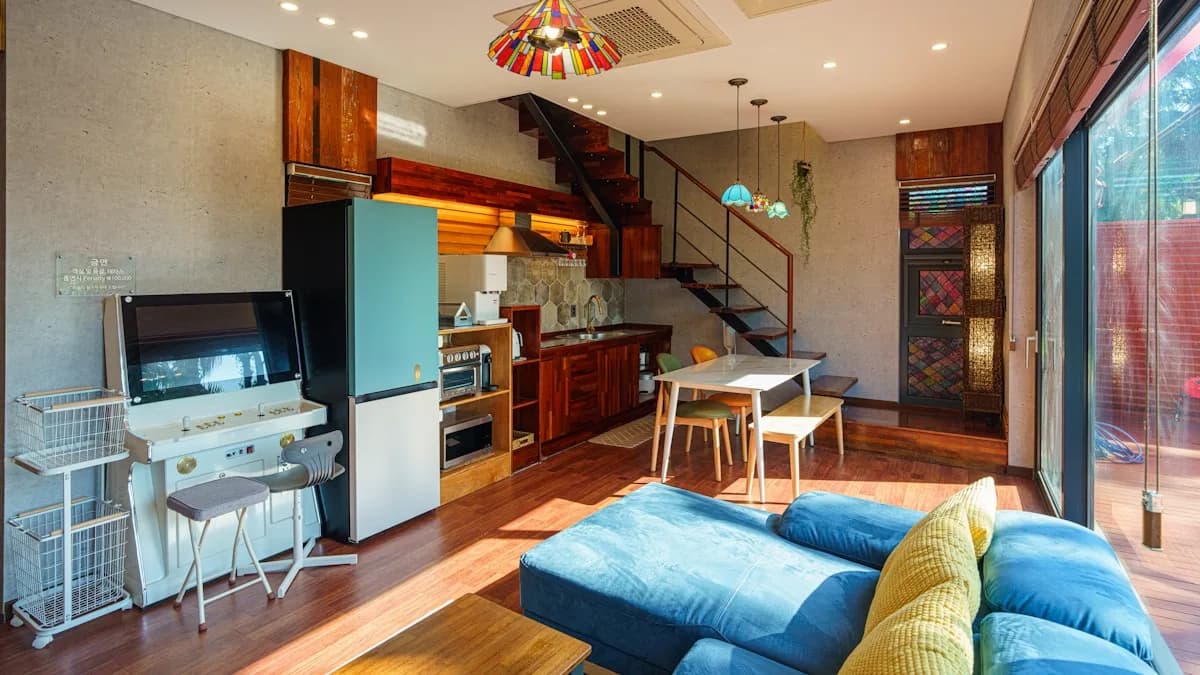
French meuble de tourisme: possible taxe fonciere surcharge, CFE mandatory from the first euro of BIC income, taxe d habitation abolished. Full local tax guide for 2026.
READY-MADE FRENCH STR DOCS
Get registered in 2 evenings.
French STR without the stress.
Instead of drafting documents from scratch (40+ hours) or paying a notaire (€2,000+), download ready-made templates compliant with Loi 2024-1039 (Loi Le Meur) and Code du Tourisme.
Owning a meuble de tourisme in France as a non-resident involves more than just income tax: several local French taxes apply automatically from the moment the property is acquired and the rental activity begins. The taxe foncière, the CFE (Cotisation Fonciere des Entreprises), the taxe de séjour and, where applicable, the taxe d'habitation sur les residences secondaires can add up to a significant annual cost. Understanding each tax, knowing when and how to pay from abroad, and setting up the right French fiscal infrastructure are essential for any non-resident STR owner.
Taxe Foncière: Annual Property Tax
The taxe foncière sur les proprietes baties (TFPB) is an annual property tax levied on the owner of built real estate in France. It is assessed regardless of whether the property is rented, vacant or owner-occupied, and regardless of whether the owner is a French resident or not. The tax is calculated on the theoretical rental value (valeur locative cadastrale) of the property, which is reassessed annually by applying a national inflation coefficient (3.9% in 2026).
Since the Loi Le Meur (2024), communes have the power to levy a specific surcharge on the taxe foncière applicable to meubles de tourisme, ranging from 5% to 90% above the standard rate. By 2026, the following major communes have adopted this surcharge:
- Paris: 60% surcharge on STR properties
- Annecy: 50% surcharge
- Megeve and Chamonix: 40% surcharge
- Bordeaux: 30% surcharge
- Lyon: 25% surcharge
The surcharge applies to properties that are registered as meubles de tourisme in the commune's official register. This means that obtaining a numéro d'enregistrement, while mandatory for legal operation, also triggers the higher taxe foncière rate in participating communes.
How to Pay Taxe Foncière as a Non-Resident
Non-resident owners can pay the taxe foncière online via the DGFIP portal (impots.gouv.fr). The process for setting up an account and paying from abroad is as follows:
- Obtain a French numéro fiscal (SPI): apply to the Service des Impots des Particuliers Non-Residents (SIPNR) in Noisy-le-Grand. Application can be made online or by post. Allow 4-6 weeks for processing.
- Create a compte particulier on impots.gouv.fr: use the SPI number to register. Select "Je suis non-resident" when prompted.
- Access the taxe foncière notice: notices are published in October each year in the "Consulter mes avis d'imposition" section. Non-residents who are not enrolled in online services receive paper notices by post (allow 4-6 weeks for international delivery).
- Pay online: payment by bank card or SEPA direct debit from a European bank account. International bank transfers (SWIFT) are not accepted for payment of French local taxes: a European IBAN is required for SEPA payment.
- Set up direct debit (prelevement a l'echeance): enroll in direct debit before 30 September each year to have the full amount debited on 15 October (or 15 November for online taxpayers). Alternatively, enroll in monthly instalment payments (mensualisation) by 30 June for deduction from January to October.
CFE: Mandatory from the First Euro of BIC Income
The Cotisation Fonciere des Entreprises (CFE) is a business tax levied on any person or entity carrying out a professional non-salaried activity in France, habitually and for consideration. Under the French tax code (art. 1447 CGI), this includes all LMNP (Loueur en Meuble Non Professionnel) STR hosts, regardless of income level. There is no minimum income threshold: even one night's rental income creates CFE liability.
| Annual Turnover (N-2) | Minimum CFE Base (2026) | Approximate CFE Amount |
|---|---|---|
| Less than 10,000 EUR | 227 EUR | 20 to 80 EUR (depending on commune rate) |
| 10,001 to 32,600 EUR | 228 EUR | 80 to 300 EUR |
| 32,601 to 100,000 EUR | 456 EUR | 200 to 700 EUR |
| 100,001 to 250,000 EUR | 912 EUR | 400 to 1,400 EUR |
| Above 250,000 EUR | 1,832 EUR | 800 to 2,500 EUR |
Key CFE rules for non-resident STR owners:
- First year exemption: new STR activities benefit from a full CFE exemption in the year of creation. If you begin renting in 2026, no CFE is due in 2026; the first CFE notice will arrive in autumn 2027 (for the 2027 tax year).
- Payment deadline: 15 December each year. Late payment attracts a 5% surcharge plus monthly interest (0.20% per month).
- How to pay: via the espace professionnel (professional tax account) on impots.gouv.fr. The CFE account is separate from the personal tax account. Register for the espace professionnel using the SIRET number of your LMNP activity.
- Mensualisaton of CFE: not available. The full amount is payable in one instalment in December, unless an advance instalment is required in June for taxpayers whose previous year's CFE exceeded 3,000 EUR.
Setting Up a Compte Fiscal Non-Résident
Managing both the personal tax account (for income tax and taxe foncière) and the professional tax account (for CFE) from abroad requires two separate registrations on impots.gouv.fr:
- Compte particulier (personal): used for income tax (2042, 2042C Pro), taxe foncière and taxe d'habitation on secondary residences. Register with your French SPI number (numéro fiscal).
- Espace professionnel (professional): used for CFE. Register with the SIRET number of your LMNP activity. If you have not yet filed the declaration de debut d'activite with INPI, you will not have a SIRET and cannot access the espace professionnel. File the declaration via inpi.fr before your first tax year ends.
Both accounts support two-factor authentication via a French mobile number or email. Non-residents without a French phone number should choose the email authentication option during setup.
Taxe d'Habitation: Abolished for Primary Residences, Still Applies to Secondary Residences
The taxe d'habitation on primary residences was fully abolished for all taxpayers in 2023. For non-resident owners of French meubles de tourisme, the situation depends on how the property is classified:
- If the property is the owner's primary residence in France (over 8 months per year of personal occupation): no taxe d'habitation.
- If the property is a secondary residence (vacation home, investment property, pied-a-terre): the taxe d'habitation sur les residences secondaires (THRS) applies. Major tourist communes have adopted maximum THRS surcharges of up to 60% (Paris, Nice, Cannes, Biarritz).
- If the property is permanently rented as a meuble de tourisme and the owner does not use it personally: some communes have resolved that the property is not a "secondary residence" and have exempted it from THRS. This is not uniform across France: check with the relevant commune.
Taxe de Séjour: Collected by Platforms, Nothing to Do for Most Hosts
The taxe de sejour (tourist tax) is collected by the French commune from guests staying in meubles de tourisme. Since 2019, platforms (Airbnb, Booking.com, Abritel, etc.) are legally required to collect and remit the tax directly to the commune for all bookings made via the platform. For direct bookings (via the owner's own website, by telephone, etc.), the host must collect and remit the tax themselves.
- Rates in 2026 range from 0.20 EUR per person per night (unclassified meuble) to 4.00 EUR per person per night (classified meuble de tourisme 4-5 stars). Some communes (Paris, Nice, Megeve) apply higher rates for premium properties.
- For direct bookings, the host must register with the commune's taxe de sejour service and submit periodic declarations (usually semi-annual or annual). Contact the commune's finance department (service des finances communales) or the Tresor Public.
- Platform taxe de sejour collection can be verified in the host's transaction history on Airbnb or Booking. Retain these records for 3 years in case of audit.
For complete practical guidance on French local taxes, registration and fiscal compliance for non-resident STR owners, visit HostReady.eu.
Don't want to search for templates and regulations on your own? The HostReady Package includes complete documentation, ready-to-use templates, and checklists - everything you need for CWTON registration and legal short-term rental, ready to use right after purchase.